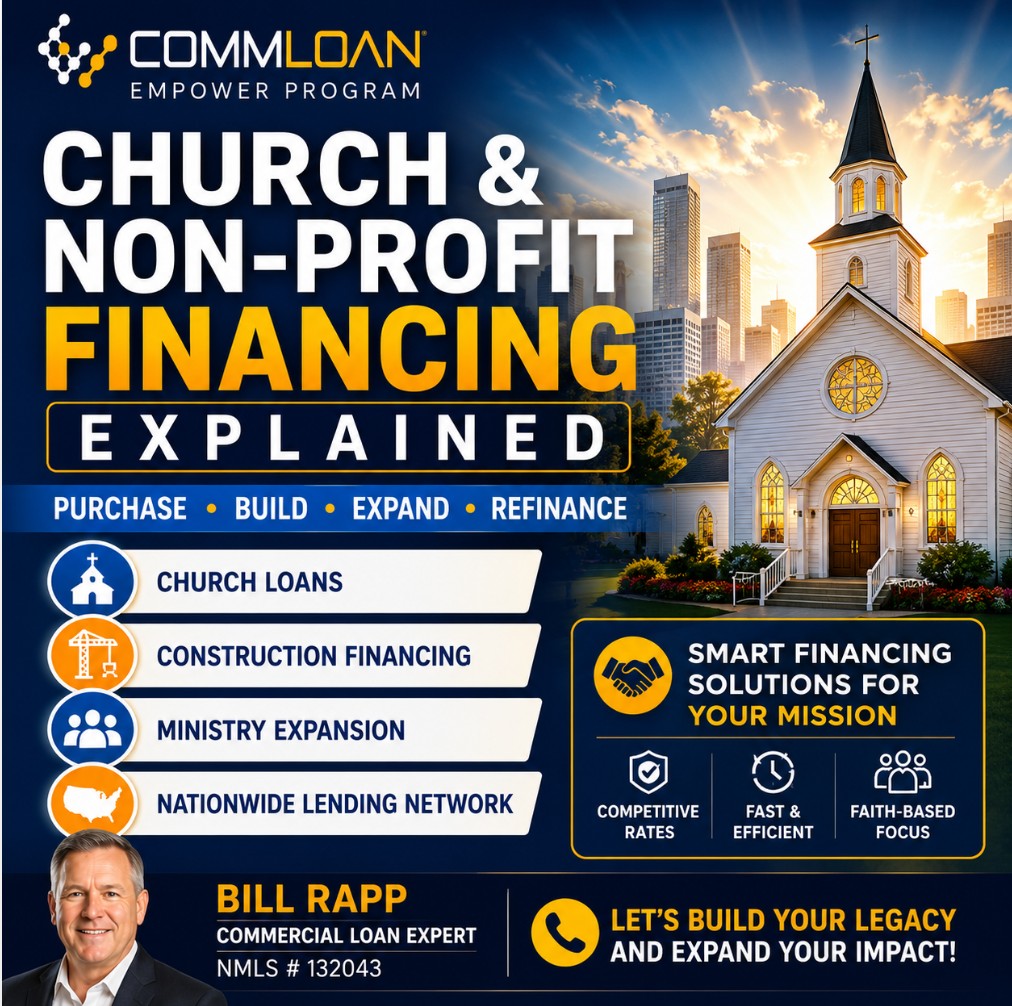
⛪ Church & Non-Profit Financing Explained: How Faith-Based Organizations Secure Commercial Real Estate Loans 💰
⛪ Church & Non-Profit Financing Explained: How Faith-Based Organizations Secure Commercial Real Estate Loans 💰
🙏 Church Loans & Non-Profit Financing: A Complete Guide to Buying, Building, and Expanding Facilities 🏢
Church & Non-Profit Financing Explained
Churches and non-profit organizations often face unique challenges when seeking financing for real estate acquisitions, facility expansions, renovations, refinancing, or new construction projects. Unlike traditional businesses, churches and non-profits typically rely on donations, grants, membership contributions, and fundraising efforts rather than conventional operating income.
The good news is that specialized financing programs exist specifically for churches, religious organizations, schools, ministries, and non-profit entities.
At CommLoan, we help churches and non-profits navigate the lending landscape by connecting borrowers with hundreds of financing sources through our CUPID™ technology platform, which provides access to banks, credit unions, debt funds, agency lenders, and specialty lenders nationwide.
What Types of Projects Can Churches Finance?
Church financing can be used for:
·Purchasing existing church buildings
·Acquiring land for future development
·Ground-up church construction
·Sanctuary expansions
·Educational facilities
·Fellowship halls
·Administrative offices
·Student ministry buildings
·Daycare facilities
·Community centers
·Refinancing existing debt
·Capital improvements and renovations
Many lenders view established churches as stable borrowers due to consistent donor support and community involvement.
Common Church Financing Programs
Traditional Bank Loans
Many community and regional banks actively lend to churches and religious organizations.
Typical terms include:
·20% to 30% down payment
·15-25 year amortization
·Fixed-rate periods of 3, 5, 7, or 10 years
·Competitive interest rates
·Relationship-based underwriting
These loans work well for established congregations with strong financial statements and operating history.
Credit Union Financing
Credit unions frequently offer attractive terms to churches and non-profits because of their community-focused mission.
Benefits may include:
·Lower fees
·Flexible underwriting
·Competitive rates
·Local decision making
·Personalized service
Non-Profit and Religious Institution Lenders
Several specialty lenders focus exclusively on financing:
·Churches
·Religious schools
·Ministries
·Faith-based organizations
·Community organizations
These lenders understand:
·Tithing income
·Donation trends
·Fundraising campaigns
·Membership growth
·Mission-based operations
This specialized knowledge often allows them to approve transactions that traditional lenders may decline.
Construction Financing
For churches building new facilities, construction financing is often structured in two phases:
Construction Phase
·Interest-only payments
·Funds advanced as construction progresses
·Draw schedules tied to milestones
Permanent Financing
Once construction is complete:
·Loan converts to long-term financing
·Lower monthly payments
·Fixed or adjustable rates available
What Do Lenders Look For?
Membership Stability
Lenders evaluate:
·Congregation size
·Historical attendance
·Membership trends
·Community engagement
Growing congregations generally receive more favorable financing terms.
Financial Strength
Lenders typically review:
·Three years of financial statements
·Donation history
·Operating budgets
·Cash reserves
·Existing debt obligations
Leadership Experience
Strong leadership matters.
Lenders often evaluate:
·Pastoral tenure
·Board governance
·Financial oversight
·Organizational stability
Property Value
The real estate itself remains an important component of the approval process.
Lenders review:
·Appraisals
·Market demand
·Property condition
·Alternative use potential
·Location characteristics
Typical Down Payment Requirements
Church financing down payments generally range from:
Property Type
Typical Down Payment
Existing Facility
20% - 30%
Expansion Project
15% - 25%
Land Purchase
25% - 40%
Construction Project
20% - 35%
Each lender's requirements vary based on risk profile and borrower strength.
Challenges Churches Face Today
Today's lending environment presents several challenges:
·Higher interest rates
·Increased construction costs
·More conservative underwriting
·Rising insurance expenses
·Inflationary pressures
However, financing remains available for qualified organizations with strong financials and clear growth plans.
Why Work With CommLoan?
Finding the right church lender can be difficult because every institution has different lending criteria.
CommLoan's CUPID™ technology allows borrowers to access a nationwide network of more than 700 lending sources and identify lenders that fit their specific project needs.
Whether you're purchasing your first facility, refinancing existing debt, building a larger sanctuary, or expanding ministry operations, having access to multiple financing options can dramatically improve your chances of securing favorable loan terms.
Final Thoughts
Church and non-profit financing is not a one-size-fits-all process. Every congregation, ministry, and organization has unique financial characteristics and growth objectives.
The key is partnering with financing professionals who understand both commercial real estate lending and the specialized needs of faith-based organizations.
With the right lender and loan structure, churches and non-profits can secure the capital necessary to grow their mission, expand their impact, and better serve their communities for generations to come.
Bill Rapp, CCIM
Director | CommLoan
📞 281-222-0433
📧 [email protected]
🌐 https://billrapp.commloan.com/
Commercial Real Estate Financing Nationwide
https://billrapp.commloan.com/
https://author.billrapponline.com/
https://www.amazon.com/dp/B0F32Z5BH2
https://veed.cello.so/FOmzTty6oi9
https://buymeacoffee.com/vikingente3
https://creplaybookseries.billrapponline.com
https://creplaybook.billrapponline.com/
©Bill Rapp, CCIM - Director - CommLoan